For thick enameled wire, use a knife or a broken saw blade to scrape off the patent leather one by one. When scraping, do not only scrape both sides, but carefully scrape around the circle without scratching the wire. This…

For thick enameled wire, use a knife or a broken saw blade to scrape off the patent leather one by one. When scraping, do not only scrape both sides, but carefully scrape around the circle without scratching the wire. This…
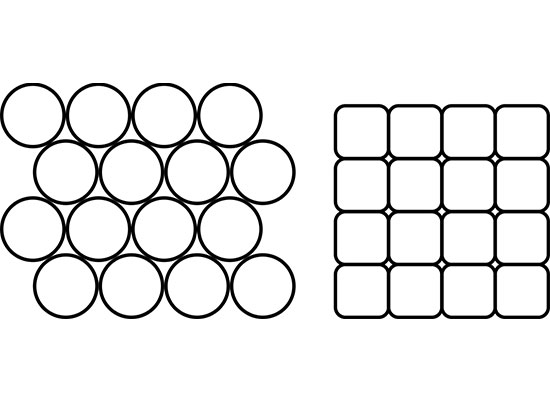
Trends in Coil Winding call for custom construction, tight specifications and high-quality spooling. Electric car drive module benefits from square magnet wire Round vs Square wire Square magnet wire wire is useful where space constraints are concerned. When formed into…

Induction toroid coil with magnetic ferrite core uses copper wire winding. Toroid coils are used when working with electricity that has a low frequency. The toroid functions as an inductor, which boosts the frequency to appropriate levels. Inductors are electronic…

EC Motors produce more power in less space Because of the need for higher performance density in motor winding technology, brushless EC (electronically commutated motors) drives with permanent magnet rotors are increasingly used instead of the asynchronous technology. Due to…

Orthocyclic winding structure creates an optimal fill factor (90.7%) for round wires. The windings of the upper layer need to be placed into the grooves provided by the lower layer. Rectangular magnet wire used in Orthocyclic winding The best volume…
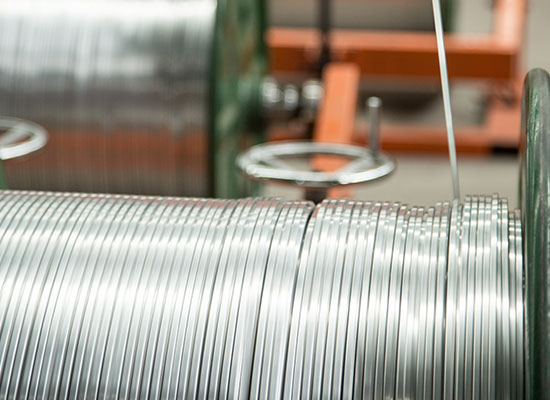
On a normal enameling machine, most of the operator’s energy and physical strength is consumed in the pay-off part. Replacing the pay-off reel makes the operator pay a lot of labor. When changing the wire, the joints are prone to…

Ideally, the winding should be positioned parallel to the winding flange, meeting an orthogonality condition. It is necessary to adjust the winding width to the number of turns per layer of the winding. For non-circular shaped coil cross-sectional areas, it…
About NEMA MW 1000 MW 1000 is approved as an American National Standard through the NEMA MW 1000 Consensus Body accredited by the American National Standards Institute (ANSI). The Consensus Body consists of magnet wire participants including wire manufacturers, end…

Specifications for particular types of winding wires – Part 0-2: General requirements – Enamelled rectangular copper wire The Redline version is available in English only and provides you with a quick and easy way to compare all the changes between…
Japanese Industrial Standards (JIS) (日本産業規格, Nihon Sangyō Kikaku, formerly 日本工業規格 Nihon Kōgyō Kikaku until June 30, 2019) are the standards used for industrial activities in Japan, coordinated by the Japanese Industrial Standards Committee (JISC) and published by the Japanese Standards…